
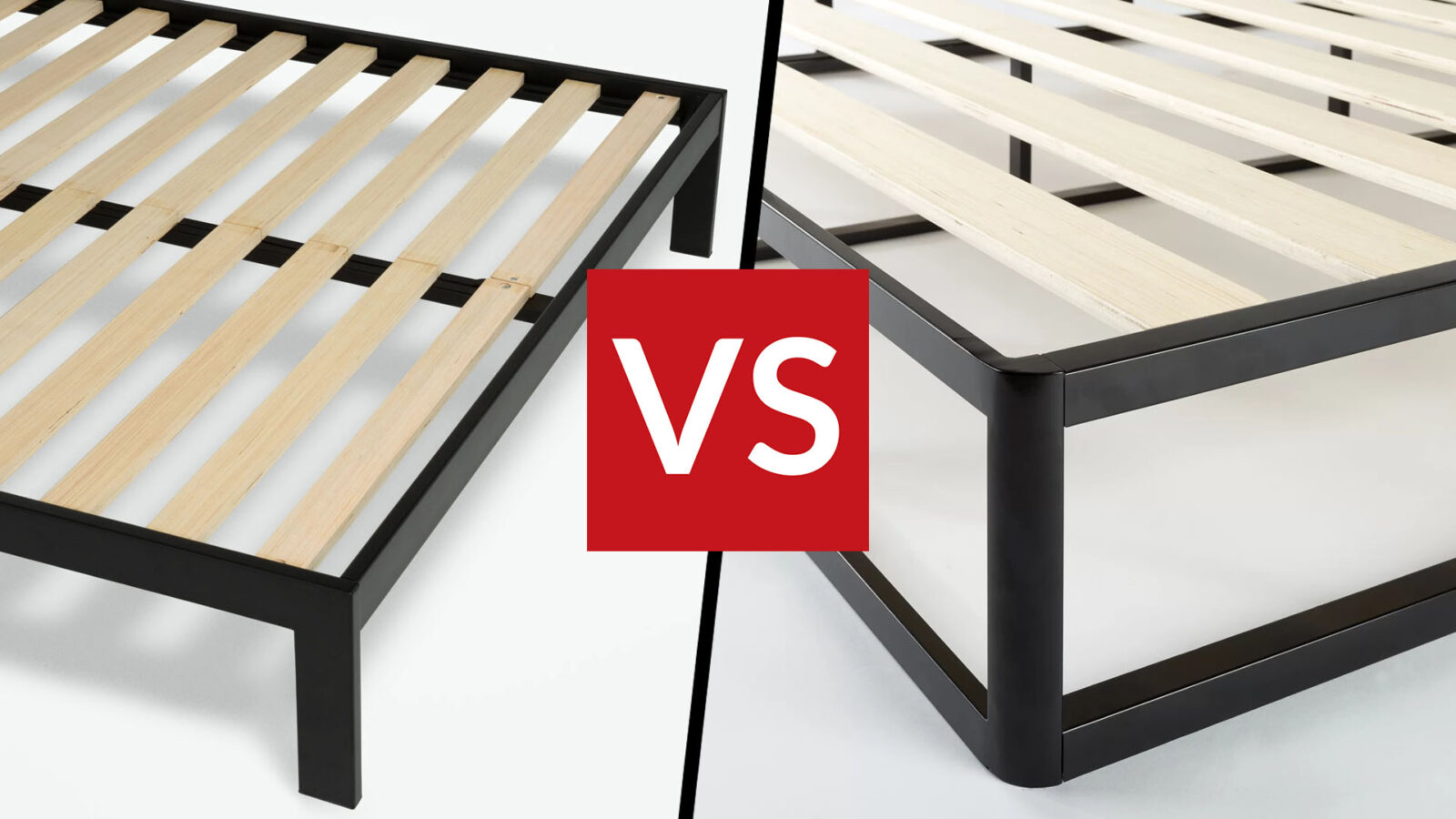
For most Australians shopping for a bed in a box, the two most common base options are platform beds and slatted frames. Both can be strong, stylish, and practical, but they do not feel the same to sleep on, and they do not treat your mattress the same over time.
The better choice depends on what you value most: firmness vs. flex, cooling vs. stability, storage vs. airflow, and even warranty requirements for your mattress. This guide explains the key differences in a simple way so you can choose a bed base that supports your sleep and your mattress investment for years.
What Is a Platform Bed?
A platform bed is a bed base with a solid, flat surface (or sometimes a very closely spaced panel system) that supports your mattress without needing a box spring. In Australia, platform beds are commonly made from timber, engineered wood, metal, or a mix of materials. The design is usually clean and modern, often sitting lower to the ground for a minimalist look.
Why people love platform beds
Platform beds are popular because they offer:
- Even, consistent support: The mattress is supported across its entire base, which can help reduce dips or uneven wear.
- A firmer feel: Because the base does not flex much, the sleep surface can feel more stable and solid.
- A tidy look: Platform frames often look streamlined and work well in modern bedrooms.
- Optional storage: Many platform beds come with built-in drawers or space underneath.
Potential downsides to consider
A platform bed can also come with trade-offs:
- Less airflow: A solid base can reduce ventilation under the mattress, which may trap a bit more heat and moisture (especially in humid homes or warmer climates).
- Heavier and harder to move: Some platform beds are bulky, especially those made from thick timber or with storage.
- Moisture management matters: If your room has poor ventilation, or you are a warm sleeper, you may need to lift and air the mattress occasionally.
Best for: People who want a stable, firm feel, prefer minimal movement, or want a clean, modern bedroom style (with possible storage perks).
What Is a Slatted Frame?
A slatted bed frame uses horizontal slats, usually timber and sometimes metal, to support the mattress. Slats can be:
- Fixed slats: Straight and rigid, offering a firmer feel.
- Flexible slats (sprung slats): Slightly curved and designed to flex, offering a bit of give.
Slatted frames are common because they are lighter, often more breathable, and can suit many mattress types when designed properly.
Why do people choose slatted frames
Slatted bases can be a great option because they provide:
- Better airflow: Gaps between slats allow heat and moisture to escape more easily, which can help your mattress stay fresher.
- A slightly softer, more responsive feel: Particularly with sprung slats, the base can add a little bounce and comfort.
- Easier handling: Slatted frames are often easier to move, assemble, or disassemble.
- Good compatibility with boxed mattresses: Many bed-in-a-box brands recommend slats, as long as spacing is correct.
Potential downsides to consider
Not all slatted frames are created equal:
- Slat spacing is critical: If slats are too far apart, foam or hybrid mattresses can sag between them over time.
- Cheaper slats can warp or crack: Thin slats or weak centre rails can reduce support and cause noise.
- More parts can mean more maintenance: Screws can loosen and slats can shift over time, especially in budget frames.
Best for: Warm sleepers, people who want more airflow, and anyone who likes a base that feels slightly more forgiving than a solid platform.
Which One Works Best with a Bed in a Box Mattress?
Most bed-in-a-box mattresses, whether memory foam, latex, hybrid, or pocket spring, are designed to work on either a platform or slats. The key is picking a base that supports the mattress properly and matches your comfort preferences.
Below are the main factors to compare.
1) Support: Stability vs. Correct Slat Spacing
Platform bed support
Platform beds provide strong, even support across the entire mattress. This can be especially helpful if you want:
- A firmer feel
- Less motion transfer (good for couples)
- More consistent long-term support
Because the mattress is fully supported, there is less risk of the base creating pressure points or uneven wear.
Slatted frame support
Slatted frames can be excellent too, but support depends on:
-
- Slat spacing (the gap between slats)
- Slat thickness and strength
- Centre support rail (especially for queen, king, and super king)
For most foam and hybrid bed-in-a-box mattresses, slats should typically be no more than about 7 cm apart to help prevent sagging between gaps. If the spacing is wider, your mattress may not get the consistent support it needs.
Quick rule:
- If your slats are close together and sturdy, a slatted frame can be just as supportive as a platform.
- If slats are wide apart or flimsy, support becomes uneven and the mattress can wear faster.
2) Cooling and Breathability: Airflow Usually Favors Slats
Why bases affect temperature
Even the best cooling mattress materials can struggle if heat and moisture cannot escape underneath. Your bed base plays a role in ventilation.
Platform beds and heat
A solid platform base can reduce airflow under the mattress. That does not automatically mean hot sleep, but if you:
- Sleep warm
- Live in a humid area
- Use a thick mattress protector
- Have limited bedroom airflow
Then a solid base may contribute to heat build-up more than slats.
Slatted frames and airflow
Slats naturally allow more air movement, which can help:
- Reduce heat retention
- Improve moisture control
- Keep the mattress feeling fresher
If cooling is a top priority, slats usually have the advantage.
3) Durability and Mattress Longevity: Quality Matters Most
Platform bed durability
A strong platform bed can last a long time, especially if it has:
- A sturdy frame
- Strong joints and fixings
- A solid centre support system
Because the mattress is evenly supported, it may also hold its shape better over time.
Slatted frame durability
Slatted frames can also last years, but they rely heavily on build quality:
- Thick, high-quality slats resist bending
- Strong centre rails reduce sag in the middle
- Proper spacing prevents mattress strain
If you choose slats, pay attention to the base design, especially for larger sizes.
4) Comfort Feel: Firm and Solid vs. Slight Flex and Bounce
Platform feel
Platform beds tend to make a mattress feel:
- Firmer
- More stable
- Less bouncy
This can be great if you like a grounded feel or want less movement from a partner.
Slatted feel
Slatted frames can make a mattress feel:
- Slightly softer
- More responsive
- A bit bouncier (especially with sprung slats)
If you like a little give, slats may feel more comfortable, particularly if your mattress is already quite firm.
5) Noise, Movement, and Couple-Friendly Sleep
If you share your bed, consider:
- Squeaks and creaks: Slatted frames can get noisy if screws loosen or slats rub. A well-built frame can still be quiet, but cheaper ones often develop sounds over time.
- Motion transfer: Platform beds often feel more stable, which can reduce movement transfer.
- Edge support: Either base can work well, but the frame’s overall build quality matters.
6) Practical Factors: Assembly, Storage, and Cleaning
Assembly
- Platform beds can be heavier and take longer to assemble.
- Slatted frames are often easier to move and set up, but may have more parts (slats, straps, centre rails).
Storage
- Many platform beds offer built-in drawers or underbed storage.
- Slatted frames can also allow underbed space, but usually without built-in storage.
Cleaning
- Slatted frames make it easier for dust and airflow to pass through; however, you may have to clean underneath more often.
- Platform beds can block dust from rising, but airflow is reduced.
A Simple Buying Checklist
Use this quick checklist when choosing your bed base:
Choose a platform bed if you want:
- A firmer, more stable feel
- Minimal mattress movement
- A modern look and potential storage
- Consistent support with fewer variables
Choose a slatted frame if you want:
- Better airflow and cooling
- A base with a little more give
- A lighter frame that is easier to move
- Flexibility in style and budget (but do not compromise on slat quality)
If you choose slats, make sure:
- Slats are sturdy and well fixed
- Slat spacing is tight (around 7 cm or less for foam and hybrid)
- There is a centre support rail for larger sizes
- The frame feels solid with minimal wobble
Common Mistakes to Avoid
- Buying a slatted frame with wide gaps: This is one of the biggest reasons foam and hybrid mattresses start to sag early.
- Ignoring centre support on queen and king beds: A strong centre rail can make a huge difference in long-term stability.
- Choosing style over structure: A beautiful frame is not a good deal if it squeaks, shifts, or weakens over time.
- Not checking mattress warranty guidelines: Some mattress brands specify base requirements (like slat spacing). Following them can help protect your warranty.
Final Verdict: Which Is Better?
There is not one best choice for everyone. The better option depends on your sleep style, comfort preferences, and bedroom needs:
- Platform beds are ideal if you want maximum stability, a firmer feel, and a sleek, structured look. They offer consistent mattress support and often reduce movement, which many couples love.
- Slatted frames are ideal if you want better airflow, a slightly softer feel, and easier handling, especially if you are a warm sleeper or want a base that helps your mattress breathe.
The best choice is the one that:
- Supports your mattress properly
- Matches how you sleep (warm or cool, firm or soft preference)
- Fits your lifestyle (moving, storage, cleaning)
- Holds up well over time
With the right base, your bed in a box mattress can perform at its best: comfortable, supportive, and built to last.